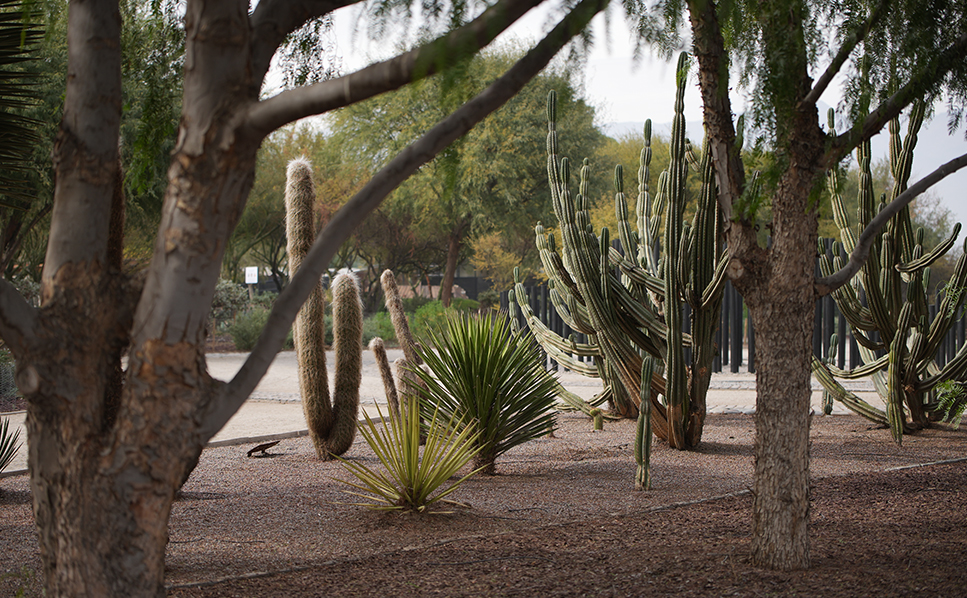
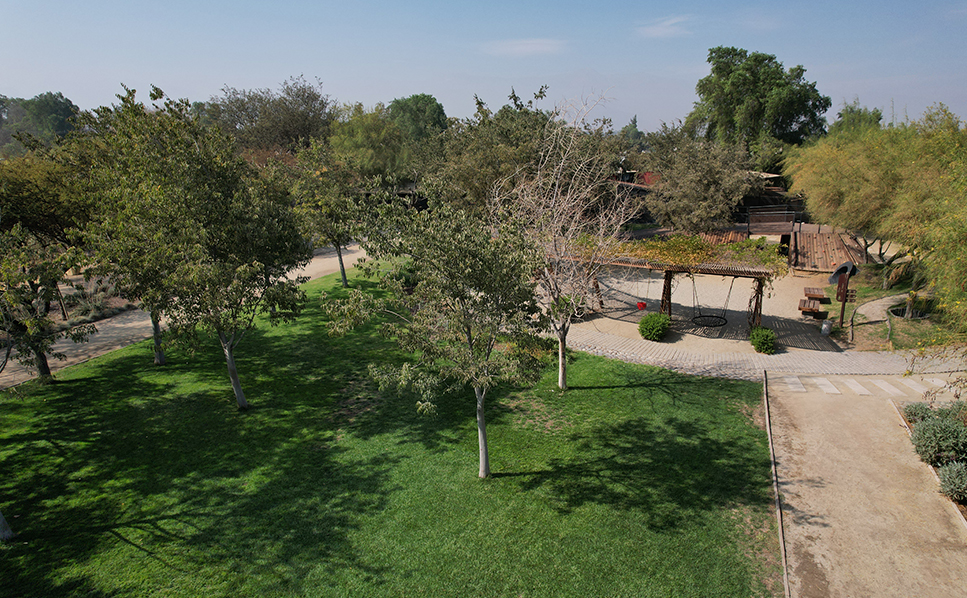
In a proud milestone for biodiversity in Chile and for Anglo American, the Quilapilún Botanical Garden in Colina – managed by Anglo American – was accredited by Botanic Gardens Conservation International (BGCI) in October 2025.The accreditation means that Quilapilún joins a global network of top botanical gardens and becomes only the third garden in Chile to achieve this status.
Juan Pablo Schaeffer, VP of Corporate Affairs and Sustainability in Chile, said: “This news fills us with pride, because, in its 4.5 hectares, our Quilapilún Botanical Garden plays a fundamental role in our purpose of re-imagining mining to improve people’s lives. Through it, we conserve ecosystems, research unique species from central Chile, promote environmental education, and generate a positive impact on both biodiversity and the community as a whole.”
Under the management of Anglo American, the recognition highlights Quilapilún’s excellence in plant conservation, environmental education, scientific research and strong institutional management, while reinforcing our commitment to protect the natural environment.
Championing native-species conservation in central Chile
Anglo American started to support the establishment of the Quilapilún Botanical Garden in 2012, as the first botanical garden dedicated to native species in the Santiago Metropolitan Region in Chile.
The botanical garden was developed in response to the rapid loss and fragmentation of central Chile’s Mediterranean ecosystems, which are among the most threatened globally due to urban expansion, land-use change and climate pressures. Its creation reflects a long-term commitment to protecting irreplaceable native flora beyond operational boundaries, while creating shared value for society.
The botanical garden is pioneering in both concept and design, led by architect Consuelo Bravo. It spans 4.5 hectares, showcasing Chile’s Mediterranean flora through three ecosystems and around 150 species and standing as the country’s only park dedicated entirely to this native flora. The species selection prioritises endemic and conservation-relevant plants, including species with restricted distributions and those vulnerable to climate change, supporting conservation and knowledge generation.